August 2020
Dear Friends, Guests, Patrons and Partners in Travel,
Namaste!
I hope this message finds you in the best of health and spirits.
Strange as it may appear but it surely is amazing to witness what the tides of change have brought about, setting the pace for what we call today “the new normal”.
The world is gradually adapting in ways so ingenious, truly laying threadbare the true grand design in all of mankind’s history, which has evolved regardless of the unrelenting blows it might have received over the ages. Safety norms abound in the country, across all its industries and institutions, slowly churning the economy’s wheels.
Growing numbers of recoveries instil the hope that humanity has been granted its place in Mother nature’s kingdom mercifully, though with greater responsibility now than ever before.
On these ‘positive’ notes and with all our faith in this steady progress, we truly hope to host you in our country very soon.
With best wishes,
Anjali Babbar
CEO
COVID 19: India fights back with recovery rate at 66.3 percent
On the 8th of June, after 10 weeks of lockdown, India started a phased reopening of its economy. With Unlock 1.0, 2.0 and most recently 3.0 the country is trying to balance attempts to revive the economy while dealing with increasing caseloads and new hotspots. India has recorded 1,908,254 confirmed COVID-19 cases, including 39,795 deaths. The states Maharashtra, Tamil Nadu, Andhra Pradesh, Karnataka and Delhi have reported the highest number of cases.
However, infections are rising rapidly in states like Karnataka, Andhra Pradesh and Assam. While India’s recovery rate continues to rise and now stands at 66.3 percent with over 1,282,215 recovered and the death rate is relatively low considering that India is the third most impacted country globally.
With the first phase of the Vaccine’s human clinical trials already initiated, India’s leading pharma firms have also started paving the way for the second and third phase in August.
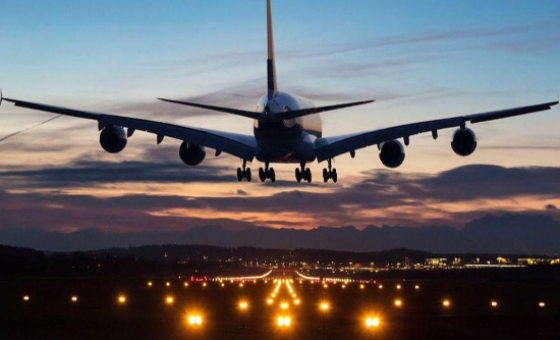
International flights set to resume as India establishes ‘air bubbles’ with US, France and UK
The Civil Aviation Minister of India, Mr. Hardeep Puri has announced a resumption of international commercial flights, as a bilateral bubble with France, US and UK that would allow airlines of these countries to operate flights amid the Covid-19 pandemic. It will carry a possible number of people but under defined conditions as countries are still imposing entry. From India, Air India will be operating flights to France, the US and UK under these bubbles.
The resumption will be based on a system of air bridges which is the reciprocity between India and the said countries allowing Indian citizens to fly into their borders and India allowing their citizens to fly into its borders. Air France has already operated 28 flights between Delhi, Mumbai, Bengaluru and Paris from July 18 to August 1 while United Airlines has flown 18 flights between India and the US from July 17 to July 31.
The American carrier is operating daily flights between Delhi and Newark and a thrice-a-week flight between Delhi and San Francisco. India’s civil aviation has recently established a bubble with the UK, under which there would be two flights per day between Delhi and London, set to resume from the August 19. The flag carrier airline of the UK, British Airways has initiated the bookings for the same.
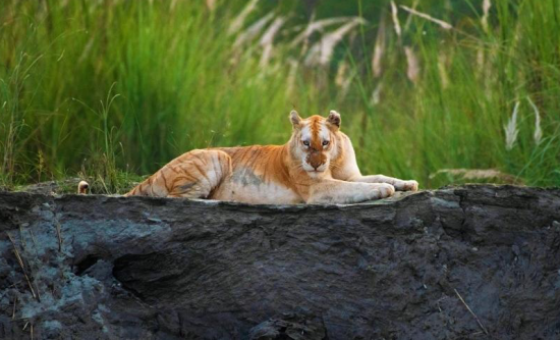
India’s Only ‘Golden Tiger’ Spotted In Assam’s Kaziranga National Park
A very rare Golden Tabby tiger, also called a Strawberry Tiger has been spotted in Kaziranga National Park in Assam. The tigress was photographed during a boat safari on the Brahmaputra river, with the luxury river cruise, M V Mahabaahu. According to one of the Indian forest service officers, this has been the only documentation of a Golden tiger in the 21st century. The only time the Golden Tigress was photographed was in 2016 by a camera trap. This female Golden tigress is believed to be the only recorded individual in the wild in the 21st century.
Though there are earlier records of sightings in different parts of India from the 1900s, no photographic records exist in the wild. The Golden Tiger or Golden Tabby Tiger is a very rare morph of a Royal Bengal tiger. This rare occurrence is a cause of concern as the recessive genes in individuals are as a result of inbreeding. In the wild, habitat destruction and loss of connectivity leads to excessive inbreeding with a fragmented population. It has been learnt that the spotted Golden tigress is of reproductive age and has been seen marking her territory in the Eastern Range of National Park.
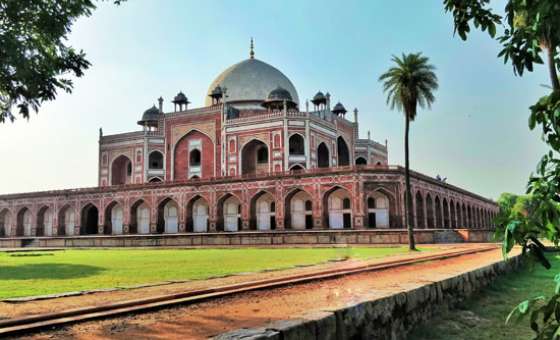
India opens Monuments for Tourists as part of Unlock 3.0
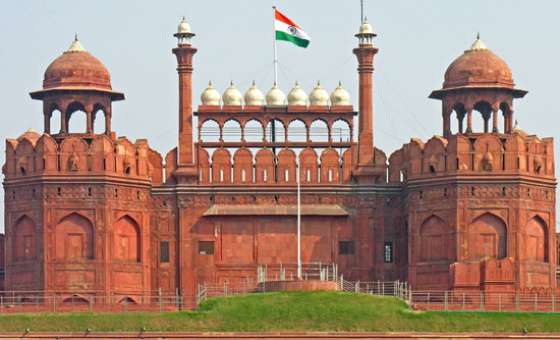
From 06th July 2020, the Ministry of Culture, India has approved the reopening of ASI (Archaeological Survey of India) - protected monuments after a shutdown of approximately more than 100 days. There are more than 3,000 monuments under the Archaeological Survey of India (ASI), such as the Khajuraho temples, Sanchi Stupa, Red Fort, Qutub Minar and many more.
As per the notification, the monuments will be opened in “compliance of the state and district administration”. While all national monuments open up for the public, Agra’s historical monuments like Taj Mahal, Agra Fort & Fatehpur Sikri will continue to remain closed until further orders.
Below is the list of SOPs and Guidelines:
- Only those monuments and museums which are in the non-containment zone will be opened for visitors
- All Centrally protected monuments and sites shall be bound by the protocol issued by the Ministry of Home Affairs, Ministry of Health and Family Welfare, as also any specific orders of the state and/or district administration Entry tickets shall be issued by e-mode only. No physical tickets will be issued until further orders
- At the parking, cafeteria and other ware sellers, only digital payment is allowed
- Visitors will have to share their phone numbers at the entrance of monuments for the purpose of contact tracing if required later
- There will be a cap on the number of visitors in select monuments. Like the number of visitors for Taj Mahal has been capped at 5,000 a day (in two slots), while that of other popular monuments is between 1,000 and 1,500 visitors in two slots each. The visitors shall follow social distancing. The use of face cover/mask is mandatory. All entrances have mandatory hand hygiene and thermal scanning provisions. Only asymptomatic persons are allowed.
- There shall be designated routes for entry & exit and movement within the monument. The route shall be one-way only, with a single line maintaining norms of social distancing.
- ASI can restrict access to the vulnerable and interior parts of any monument.
- Visitors shall be asked to stick to time limits inside the monument, as far as possible. The security staff inside the monument shall ensure that there is no crowding at any point.
- No group photography is allowed within the premises.
- All Sound and Light Shows and films show at monuments shall remain suspended till further order.
- Vehicles shall be parked in designated areas. The contractor who runs the parking area shall collect the parking fee through digital payment mode only. No physical cash transaction is allowed
- Guides and photographers with a valid license are allowed to work inside the monuments
- No food/eatables shall be allowed inside the premises
- All the staff shall be well protected as per health protocol
- Cleaning and sanitization of monuments and museums, including toilet blocks, benches and frequently used surfaces, shall be done at regular intervals.
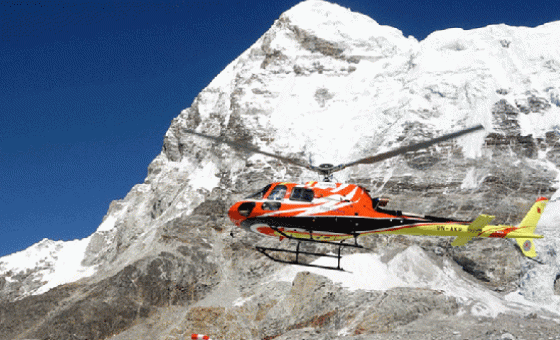
Nepal set to revive tourism sector by resuming flight services from August
With the country making steady progress in its fight against the coronavirus outbreak, the Nepal Government is working on a tentative plan to start domestic flights from August 5 and international flights from August 17. The first round of flights will be to and from capital Kathmandu. While in total the Himalayan nation has reported 19,273 of Covid-19 cases, the number of active cases are on a decline and the recovery rate is a commendable 66.12 percent.
The Nepal government had suspended air travel in the third week of March to contain the spread of the virus. However, charter flights were operated to deliver medical equipment and for repatriation. The resumption of air services is expected to give a much-needed boost to the tourism industry which has struggled due to the pandemic. Thousands of Nepalese in the tourism sector have lost jobs and many enterprises have shut shop.
According to the World Travel and Tourism Council's 2018 report, Nepal's tourism sector directly and indirectly employs about 1.1 million people, generating revenue of over 24,000 crore Nepali Rupees. In total, the travel and tourism sector contributes about 7.9 per cent of the country's Gross Domestic Product.
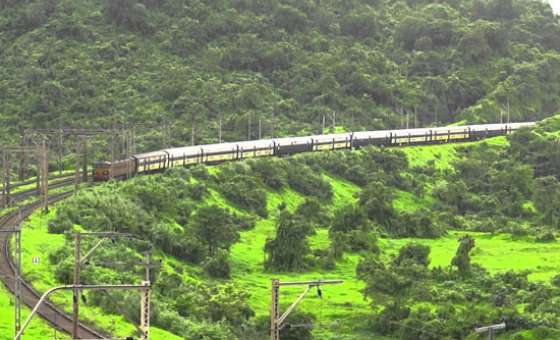
Indian Railways set to become ‘Green Railways’ by 2030
A gradually reviving economy needs an equally powerful contingency plan for a sustainable future. Indian Railways is amongst those industries to set that feat for the country by aiming to go completely green by 2030. Some of the measures to achieve net-zero carbon emission include railway electrification, improving energy efficiency of locomotives and trains and fixed installations, green certification for installations and stations, fitting bio toilets in coaches and switching to renewable sources of energy.
Indian Railways has completed electrification of more than 40,000 route km (RKM) (63 per cent of Broad Gauge routes) in which 18,605 km electrification work has been done during 2014-20. Indian Railways has fixed a target of electrification of 7000 RKM for the year 2020-21. All routes on the BG network have been planned to be electrified by December 2023.
Indian Railways has also taken a number of initiatives to promote solar energy and is trying to produce power from land-based solar installations for running trains. Solar and wind energy will power the railway electricity grid in a big way. It has started other green initiatives like 100 per cent LED illumination of buildings and stations and has also acquired Green Certification from CIII to seven production units, 39 workshops, six diesel sheds and 1 stores depot. In addition, 14 railway stations and 21 other buildings/ campuses have also been Green certified. Other than this 215 Stations have been certified with Environment Management System (EMS)/ISO 14001. A total of 69,000 coaches have been fitted with more than 2,44,000 bio-toilets in Indian Railways.
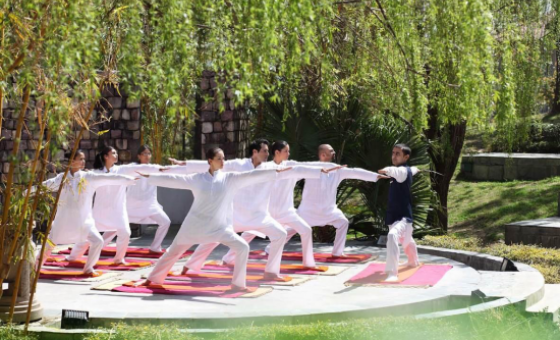
Ananda in the Himalayas to welcome tourists from August
Situated in the Himalayan foothills of Uttarakhand, the palatial retreat is all set to open its gates to domestic travelers from August 1. With traditional sciences of Ayurveda, Yoga, Meditation and Vedanta, the retreat is all set to offer travelers the much awaited healing get-away to improve health and well-being.
Located about 16km from Rishikesh, the Yoga capital of India, Ananda is a 100 acre palace estate surrounded by pristine forests, clear blue skies and breath-taking mountain views, an ideal location for travelers emerging from the lockdown. The sheer space, abundance of untouched nature, and ability to rejuvenate in a safe environment with ample distancing, is what Ananda offers.
As India steps out cautiously from lockdown, Ananda will reopen with an enhanced 360°approach, offering not only comprehensive wellness programmes at the retreat, but also an entire range of new virtual wellbeing programmes. As part of Ananda’s safety led initiatives, their entire wellness and guest services team would be located on Ananda’s premises including spa therapists, Ayurvedic Doctors & Yoga teachers, Chefs and Restaurant staff, housekeeping, room service, and front office staff. To provide complete safety and a secure environment, the entire Ananda team will be tested regularly. All required protocols, including daily assessments by a team of doctors, will be followed with guests at Ananda.