

June 2021
Dear Friends, Guests, Patrons and Partners in Travel,
Namaste!
Greetings from emerging India, one that has fought and still continues to fight it’s battle with Covid 19, the Second Wave having hit harder than anticipated. With grit and mettle of it’s medical fraternity, backed by powerful Government machinery set into motion, from procurements to creating of the much needed infrastructure, the stupendous support given by countries across the globe, the virus spread was controlled and curtailed. Our heartfelt gratitude to one and all for all help rendered.
The collective efforts of all bore the desired results, the spike that was unyielding initially, slowly paved the way and brought the graphs gradually down. India has maintained the lowest per million deaths, infection rate and mortality rate as compared to the world’s average.
Nevertheless, this wave of Covid 19 sure left undelible marks amongst many, in closed circles of family and friends, with many dear ones lost. Our prayers with all, to have fortitude and courage to go through these trying times.
Our gratitude to each and everyone for sending, your kind messages during these challenging times. It sure made a difference!!
With the vaccination drive now gaining momentum, both in the cities and in rural India, it will not be too far too long before we are all vaccinated and people across the world at large too would have received the necessary jabs. All this will gradually lead to the world once again being set into motion and travel will get its feet back.
Till then stay Positive, stay Safe and Stay Well!!
Anjali Babbar Basu
CEO
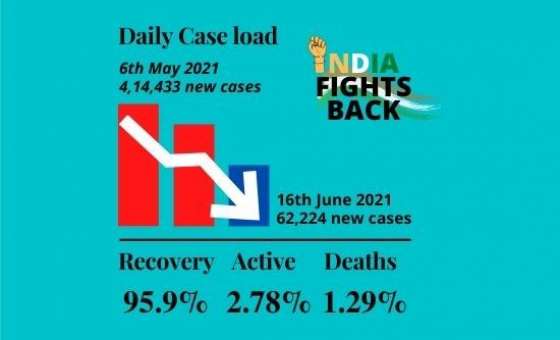
India has rapidly recovered from the 2nd wave of pandemic
The second wave of pandemic in India is now receding and daily caseloads have fallen to less than 15% of what it was during the peak. Recovery levels have crossed 95% and active cases have gone down to 3%. The country is progressively unlocking as the infection positivity rate in the country is now 3.45% and we hope, in coming days it would be far lower.
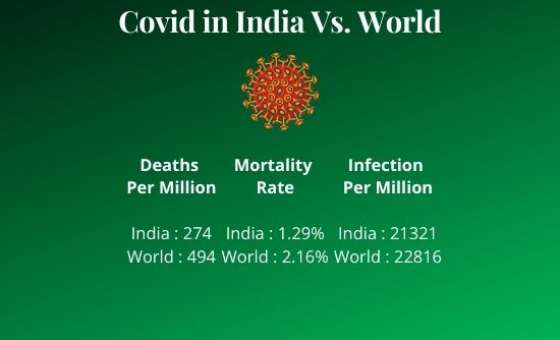
India’s fatality rate has been consistently below the world rate
Despite of the dense population, medical infrastructure challenges, India has maintained the low per million deaths and infection rate than the World’s average. There has been a sudden jump in the number of coronavirus cases in India in the last two months but the figure of recoveries is also increasing at the same speed. India has one of the lowest COVID mortality rates in the world but each and every death is tragic and painful. The National Mortality Rate currently stands at 1.29 per cent.

India will be fully vaccinated by the end of 2021
Government of India is aiming to vaccinate the entire adult population of India against Covid-19 by the end of year 2021. In an official statement the Union Health Minister said that by the year end India will have 2.67 billion vaccine doses which will enable it to cover all those who are above the age of 18. India has so far administered over 265 million vaccine doses.
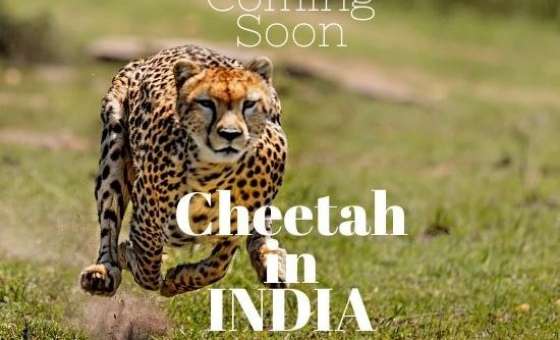
CALL OF THE WILD!!
Cheetah called “The Hunting Leopard” as they could be tamed and used for coursing : The world's fastest cat is returning to India. India is all set to welcome back the world’s fastest cat which will make the country habitat of 6 big cats - The Royal Bengal Tiger, The Asiatic Lion, The Indian Leopard, The Snow Leopard, The Clouded Leopard and Speed racer , new member Cheetah. It is the fastest land animal, estimated to be capable of running at 80 to 128 km/h (50 to 80 mph) with the fastest reliably recorded speeds being 93 and 98 km/h (58 and 61 mph), and as such has several adaptations for speed, including a light build, long thin legs and a long tail. The cheetah was declared extinct in India in 1952, and is expected to be re-introduced into the country in November this year at the Kuno National Park in Madhya Pradesh. Officials from India will be sent to South Africa for sensitization and training in June and July this year and according to the plan, the transportation of the cheetahs will take place in October and November.
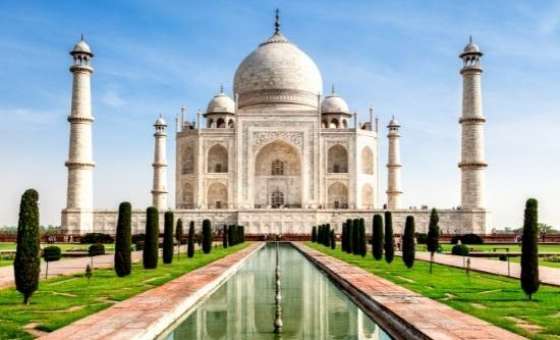
Taj Mahal and other ASI monuments, museums opened to welcome tourists.
The Archaeological Survey of India (ASI) has decided to reopen all centrally protected monuments from June 16. All the monuments across India were shut down after the country was hit by the deadly second wave. There are around 3600 centrally-protected monuments in the country. Besides, the country has nearly 50 national galleries and museums that are also centrally-protected. All these will open their doors to visitors on June 16. According to ASI, the reopening will be follow strict orders and protocols, duly adhered to by the state and District Disaster Management Authorities. All the health and safety guidelines and SOPs issued by authorities will be followed.

Kerala: Tourist destinations to become 100 percent ‘vaccinated zones’ by July 2021
All popular tourist destinations in Kerala may soon be declared as completely vaccinated zones. The state government is mulling to provide COVID-19 jabs to all those who are involved in the tourism sector. The Tourism Minister, while announcing this, added that they are planning to make famous tourist hotspots in the state 100 per cent vaccinated zones by July 15, with support of the health department.
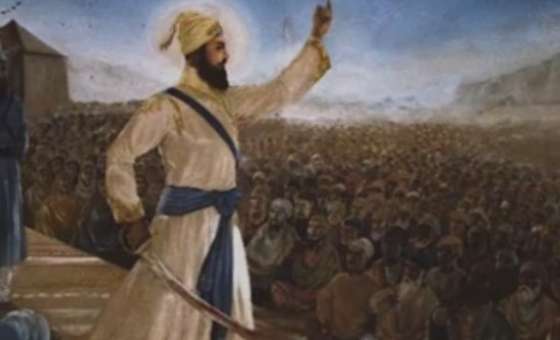
Patna in the State of Bihar: A museum and theme park dedicated to the life of 10th Sikh Guru - Guru Gobind Singh Ji – will find firm ground to mark 350 birth anniversary of the Guru.
Gobind Singh was the only son of Guru Tegh Bahadur, the ninth Sikh guru, and Mata Gujri.
His father Guru Tegh Bahadur was petitioned by Kashmiri Pandits in 1675 for protection from the fanatic persecution by Iftikar Khan, the Mughal governor of Kashmir under Mughal Emperor Aurangzeb. Tegh Bahadur considered a peaceful resolution by meeting Aurangzeb, but was cautioned by his advisors that his life may be at risk. The young Gobind Rai – to be known as Gobind Singh after 1699 – advised his father that no one was more worthy to lead and make a sacrifice than him. His father made the attempt, but was arrested then publicly beheaded in Delhi on 11 November 1675 under the orders of Aurangzeb for refusing to convert to Islam and the ongoing conflicts between Sikhism and the Islamic Empire.
After his father's martyrdom he was made the tenth Sikh Guru on Vaisakhi on 29 March 1676.
The education of Guru Gobind Singh continued after he became the 10th Guru, both in reading and writing as well as martial arts such as horse riding and archery. In 1684, he wrote the Chandi di Var in Punjabi language – a legendary war between the good and the evil, where the good stands up against injustice and tyranny, as described in the ancient Sanskrit text Markandeya Purana. He stayed in Paonta, near the banks of river Yamuna, till 1685.
The period following the execution of Guru Tegh Bahadur – the father of Guru Gobind Singh, was a period where the Mughal Empire under Aurangzeb was an increasingly hostile enemy of the Sikh people. The Sikh resisted, led by Gobind Singh, and the Muslim-Sikh conflicts peaked during this period. Both Mughal administration and Aurangzeb's army had an active interest in Guru Gobind Singh. Aurangzeb issued an order to exterminate Guru Gobind Singh and his family.
"When all other means have failed,
It is but lawful to take to the sword."
— Guru Gobind Singh, Zafarnama
In 1699, the Guru requested the Sikhs to congregate at Anandpur on Vaisakhi (the annual spring harvest festival). According to the Sikh tradition, he asked for a volunteer. One came forward, whom he took inside a tent. The Guru returned to the crowd alone, with a bloody sword. He asked for another volunteer, and repeated the same process of returning from the tent without anyone and with a bloodied sword four more times. After the fifth volunteer went with him into the tent, the Guru returned with all five volunteers, all safe. He called them the Panj Pyare and the first Khalsa in the Sikh tradition.
Panj Pyare ( the five beloved ones), is the collective name given to five Sikh men − Bhai Daya Ram became Bhai Daya Singh, Bhai Dharam Ram became Bhai Dharam Singh, Bhai Himmat Rai became Bhai Himmat Singh, Bhai Mohkam Chand became Bhai Mohkam Singh, Bhai Sahib Chand became Bhai Sahib.
Guru Gobind Singh then mixed water and sugar into an iron bowl, stirring it with a double-edged sword to prepare what he called Amrit ("nectar"). He then administered this to the Panj Pyare, accompanied with recitations from the Adi Granth, thus founding the khande ka pahul (baptization ceremony) of a Khalsa – a warrior community. The Guru also gave them a new surname "Singh" (lion). After the first five Khalsa had been baptized, the Guru asked the five to baptize him as a Khalsa. This made the Guru the sixth Khalsa, and his name changed from Guru Gobind Rai to Guru Gobind Singh.
Guru Gobind Singh initiated the Five K's tradition of the Khalsa,
- Kesh: uncut hair.
- Kangha: a wooden comb.
- Kara: an iron or steel bracelet worn on the wrist.
- Kirpan: a sword or dagger.
- Kacchera: short breeches.
Guru Gobind Singh believed in a Dharam Yudh (war in defence of righteousness), something that is fought as a last resort, neither out of a wish for revenge nor for greed nor for any destructive goals.To Guru Gobind Singh, one must be prepared to die to stop tyranny, end persecution and to defend one's own religious values. He led fourteen wars with these objectives, but never took captives nor damaged anyone's place of worship.
Gobind Singh's mother Mata Gujri and his two younger sons were captured by Wazir Khan, the Mughal governor of Sirhind. His youngest sons, aged 5 and 8, were tortured and then executed by burying them alive into a wall after they refused to convert to Islam, and Mata Gujri collapsed on hearing her grandsons' death, and died shortly after. His two eldest sons, aged 13 and 17, were killed in the Battle of Chamkaur against the Mughal army.
Post death of Aurangzeb in 1707, immediately a succession struggle began between his sons who attacked each other. The official successor was Bahadur Shah, who invited Guru Gobind Singh with his army to meet him in person in the Deccan region of India, for a reconciliation but Bahadur Shah then delayed any discussions for months.
Wazir Khan, a Muslim army commander and the Nawab of Sarhandh, against whose army the Guru had fought several wars, commissioned two Afghans, Jamshed Khan and Wasil Beg, to follow the Guru's army as it moved for the meeting with Bahadur Shah, and then assassinate the Guru. The two secretly pursued the Guru whose troops were in the Deccan area of India, and entered the camp when the Sikhs had been stationed near river Godavari for months.They gained access to the Guru and Jamshed Khan stabbed him with a fatal wound at Nanded
According to Senapati's Sri Gur Sobha, an early 18th century writer, the fatal wounds of the Guru was one below his heart. The Guru fought back and killed the assassin, while the assassin's companion was killed by the Sikh guards as he tried to escape.
The Guru died of his wounds a few days later on 7 October 1708. His death fuelled a long and bitter war of the Sikhs with the Mughals.
